What Is Implant Failure?
A failing dental implant is one that is not integrating properly with the bone or is no longer functioning as intended. Implant failure can occur in the early stages (within weeks or months after placement) or later on (after several months or years). The causes and manifestations may vary, but the outcome is the same: instability, discomfort, and often the need for intervention.
Early implant failure usually results from poor osseointegration, meaning the implant does not fuse with the surrounding bone. This could be due to infection, insufficient bone quality, or improper placement.
Late implant failure is often caused by peri-implantitis (a bacterial infection of the gum and bone around the implant), mechanical overload, or gradual bone loss over time. Poor oral hygiene, smoking, uncontrolled diabetes, and a lack of regular maintenance care can all contribute to this type of failure.
Signs You May Have a Failing Implant
It’s important to recognise the signs of a failing implant early, as timely intervention can often save the restoration or prevent more extensive complications. Symptoms may include:
Persistent pain or discomfort at the implant site
Looseness or movement of the implant or crown
Swelling, redness, or pus in the surrounding gum area
Receding gums or bone loss around the implant
Difficulty chewing or biting
Unpleasant taste or odour from the implant site
If you are experiencing any of these symptoms, it is essential to seek a professional evaluation without delay.
Understanding Why Implants Fail
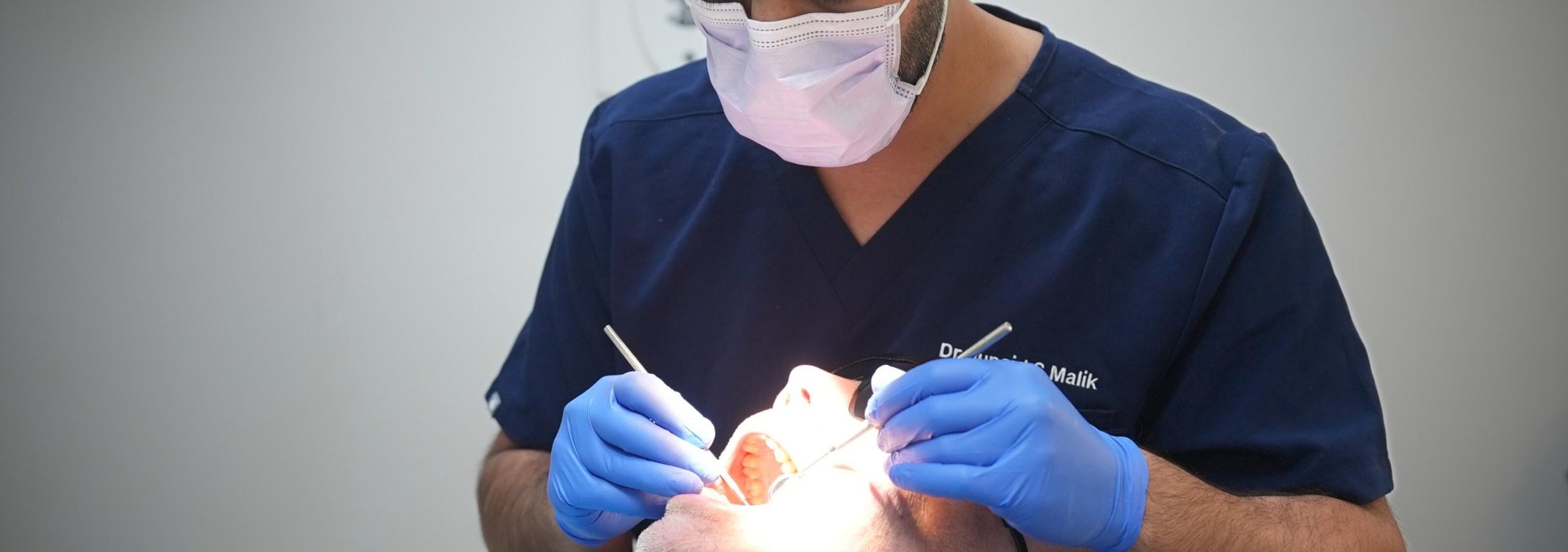
Dr Malik sees many patients who arrive at his clinic after a disappointing or failed implant experience elsewhere. In many cases, implant failure is not the fault of the patient, but the result of rushed planning, poor placement, inadequate bone and soft tissue support, or suboptimal post-operative care.
Implant success relies on meticulous attention to multiple factors:
Proper case selection – Not all patients are ready for implants without preparatory work such as bone grafting or periodontal therapy.
Accurate digital planning – Modern implantology uses CBCT scans and surgical guides to ensure optimal positioning. Improper angles or depths can stress the implant or surrounding bone.
Soft and hard tissue health – Without adequate bone volume and healthy gums, the long-term prognosis of the implant is compromised.
Maintenance and hygiene – Even the best-placed implants require professional upkeep and a strong commitment to oral hygiene.
Dr Malik’s strength lies in diagnosing precisely where things went wrong—and designing a comprehensive plan to restore stability and health to the implant site.
How Dr Malik Treats Failing Implants
At the heart of Dr Malik’s implantology work is a belief in second chances. Patients who have experienced implant failure are not “difficult cases”—they simply need the right expertise. Here’s how he approaches each situation:
1. Comprehensive Diagnostics
The process begins with a detailed clinical examination supported by high-resolution digital scans and radiographic imaging. These tools provide a complete 3D picture of the bone structure, surrounding teeth, soft tissue health, and any underlying infection or biomechanical issues.
2. Identifying the Cause
Every failed implant has a story. Was it placed in an area with insufficient bone? Was there an unrecognised infection? Was the load on the implant too great, or was maintenance neglected?
Understanding the root cause is critical—not only for resolving the current problem but for ensuring the replacement solution is successful in the long term.
3. Treatment Options for Failing Implants
Depending on the type and extent of the failure, treatment may include one or more of the following:
a. Peri-implantitis Treatment
If the implant is stable but surrounded by inflamed, infected tissue, Dr Malik may recommend a minimally invasive cleaning procedure using ultrasonic and laser-assisted tools. In some cases, localised antimicrobial therapy and regenerative techniques (such as guided bone or soft tissue regeneration) can restore the affected area.
b. Implant Removal and Site Rehabilitation
If the implant is no longer viable, it must be removed carefully to preserve as much bone as possible. Once removed, Dr Malik focuses on site preservation and regeneration. This may involve:
Socket preservation with bone grafting materials
Platelet-rich fibrin (PRF) or growth factors to encourage healing
Sinus lift or ridge augmentation, when necessary
Once the area has healed and regenerated, a new implant can be placed—this time with careful digital planning and precise execution.
c. Immediate Implant Replacement (When Appropriate)
In selected cases where infection is well-controlled and bone levels are stable, Dr Malik may offer immediate implant replacement. This option minimises treatment time and preserves tissue contours—but only when strict criteria are met for safety and success.
Advanced Techniques: Digital Planning and Guided Surgery
Dr Malik employs cutting-edge digital tools to ensure precision at every stage of the implant journey. By using 3D imaging and planning software, he creates a virtual model of your mouth, allowing for:
Ideal implant positioning
Custom-made surgical guides
Accurate restoration design
This approach reduces risk, enhances the aesthetic outcome, and shortens surgical time—especially beneficial for patients who have already endured a failed implant experience and are seeking a predictable solution.
Complex Cases and Full Arch Rehabilitation
In many cases, failing implants are not isolated but part of a broader problem—such as a poorly executed full-arch restoration, a collapsed bite, or widespread bone loss.
Dr Malik has extensive experience in rescuing full-mouth cases where multiple implants have failed, restorations have become unstable, or prosthetics have lost function or harmony with the bite. His multidisciplinary approach means collaborating with specialists in prosthodontics, periodontology, and oral surgery when required, to achieve optimal results.
Emotional Impact and Patient Confidence
Experiencing implant failure can be emotionally distressing. Many patients feel frustrated, disheartened, or even ashamed. Dr Malik understands the psychological toll that dental complications can have, especially when you’ve invested time, trust, and finances into your treatment.
That’s why he approaches each patient with empathy, transparency, and a deep respect for their journey. His consultations are not rushed. He takes time to explain every aspect of the issue, answer your questions thoroughly, and reassure you that failure does not mean defeat.
Long-Term Maintenance and Prevention
Once your new implant or restoration is in place, Dr Malik provides a detailed maintenance plan that includes:
Professional hygiene appointments with implant-specific protocols
Tailored advice on at-home cleaning techniques
Occlusal (bite) assessments to prevent overload
Periodic X-rays and scans to monitor bone levels and implant health
Prevention is not a passive process—it is a partnership. By working together, you and Dr Malik can ensure your implants remain healthy, functional, and beautiful for decades to come.
Book a Consultation Today
If you suspect your dental implant is failing—or you’ve been told there’s no hope for your restoration—don’t give up. Dr Junaid Saleem Malik has helped countless patients reclaim their smiles, their health, and their confidence after implant failure.
Through advanced diagnostics, expert surgical technique, and compassionate care, he can turn a negative experience into a success story. Whether your implant is loose, infected, or has already been removed, a solution is possible—and it starts with a conversation.
Take the first step today. Book your implant rescue consultation with Dr Malik and let experience, precision, and care lead the way to lasting results.