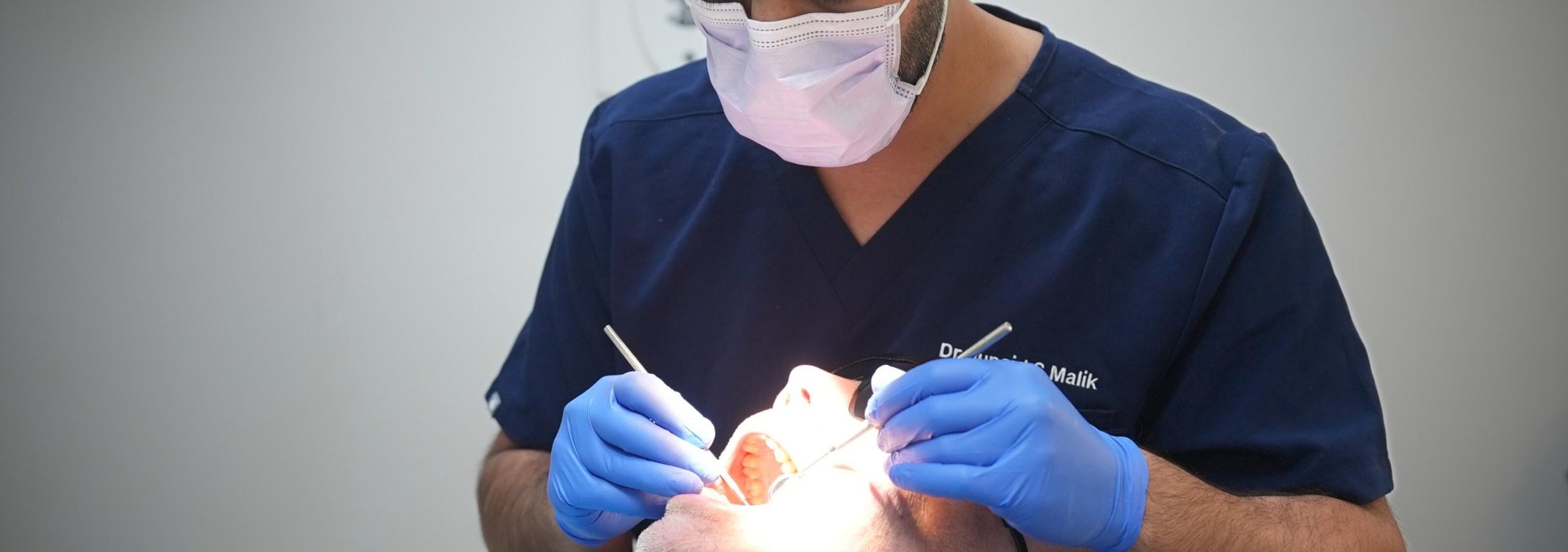
What Happens When All Teeth Are Lost?
When teeth are missing, several problems can arise:
Bone Loss and Facial Changes
Without teeth to stimulate the jawbone, the bone begins to shrink over time. This process, known as bone resorption, can lead to facial sagging, making a person appear older than they actually are.Difficulty Eating and Speaking
Tooth loss makes it harder to chew properly, which can lead to nutritional deficiencies and digestive problems. Speech can also be affected, causing slurred pronunciation or difficulty articulating certain sounds.Challenges with Traditional Dentures
Although traditional dentures restore function and appearance, many patients find them uncomfortable, unstable, or loose, especially in the lower jaw. Poorly fitting dentures can lead to sore gums, difficulty chewing, and a lack of confidence in daily life.
The good news is that modern dentistry offers solutions that can prevent bone loss, improve stability, and restore near-natural function.
Restoring Your Smile: What to Expect
With the right treatment, patients can enjoy:
A secure and stable replacement for missing teeth.
A natural-looking smile that enhances facial proportions.
Improved speech and pronunciation.
The ability to chew a varied, nutritious diet without discomfort.
Preservation of jawbone, preventing further bone loss and facial sagging.
Depending on your specific needs and preferences, there are several treatment options available.
Treatment Options for Complete Tooth Loss
Traditional (Complete) Dentures
Complete dentures are a removable option designed to replace all missing teeth in the upper or lower jaw (or both). They rest on the gums and are custom-made to match the shape of your mouth.
How They Work
Upper dentures rely on suction for retention, while lower dentures may require adhesives for added stability.
Made from acrylic or composite materials, they mimic the appearance of natural teeth and gums.
What You Can Expect
A full, natural-looking smile.
Basic function for eating and speaking.
A cost-effective way to replace missing teeth.
Challenges
Can feel bulky or uncomfortable, especially at first.
May become loose over time as the jawbone changes shape.
Require regular adjustments or replacements due to natural wear.
Implant-Retained Dentures (Overdentures)
For those seeking more stability, implant-retained dentures offer a secure and comfortable alternative. These dentures are supported by two to six dental implants, preventing unwanted movement.
How They Work
Dental implants are placed in the jawbone to act as anchors.
The denture has special attachments that allow it to snap onto the implants, keeping it in place.
What You Can Expect
Greater stability and less movement compared to traditional dentures.
Improved comfort with less gum irritation.
Better chewing ability, allowing for a more varied diet.
Helps slow down bone loss, preserving the jaw structure.
Challenges
Requires adequate bone density for implant placement.
Still needs to be removed daily for cleaning.
Higher initial cost than conventional dentures, but longer-lasting.
Implant-Supported Fixed Bridge (Full-Arch Restoration)
For the closest experience to natural teeth, a fixed implant bridge is the ideal solution. This treatment, often referred to as "All-on-4" or "All-on-6", involves placing multiple implants in the jaw to support a permanent, non-removable bridge.
How It Works
Four to six implants are placed strategically in the jawbone.
A custom-made bridge is attached to the implants, replacing a full arch of teeth.
The bridge stays in place permanently, restoring function and aesthetics.
What You Can Expect
Non-removable – just like real teeth.
Up to 90% of natural chewing ability restored.
Prevents bone loss and facial sagging.
A natural-looking smile with a strong, durable bite.
Challenges
The healing process is more involved than with dentures.
Higher initial cost, but a lifelong investment in oral health.
Some patients may require bone grafting before implant placement.
Additional Procedures for Long-Term Success
For patients with significant bone loss, certain procedures may be needed to ensure a successful implant placement:
Bone Grafting
If the jawbone has shrunk significantly, a bone graft helps rebuild lost volume, creating a stable foundation for implants.
Sinus Lift
For upper jaw implants, a sinus lift may be necessary to add bone height in the sinus area, ensuring safe and effective implant placement.
Why Choose Dr. Junaid Saleem Malik for Full-Arch Rehabilitation?
Full-mouth rehabilitation is a complex treatment that requires expertise in implantology, prosthodontics, and aesthetics. Dr. Junaid Saleem Malik brings a high level of skill and experience to each case, ensuring patients receive the best possible outcome.
What Sets His Approach Apart?
Comprehensive Assessment – A detailed evaluation, including CBCT scans, to customise the best treatment plan.
Advanced Surgical Techniques – Guided implant surgery and immediate loading protocols ensure precise placement with minimal discomfort.
Aesthetic Excellence – Prosthetic solutions are designed with natural aesthetics in mind, ensuring a beautiful and functional result.
Long-Term Support – Whether removable or fixed, Dr. Malik provides ongoing care and maintenance strategies to maximise the longevity of your new smile.
Which Treatment Is Right for You?
Choosing between traditional dentures, implant-retained dentures, or a fixed full-arch restoration depends on factors such as:
Bone density and jaw health
Personal preference (removable vs. fixed teeth)
Lifestyle needs
Budget and long-term goals
A consultation with Dr. Junaid Saleem Malik can help you determine the most suitable solution for your smile and overall well-being.
Book a Consultation Today
If you’re ready to regain a full, functional smile, contact our clinic today to schedule a consultation. Explore your options for full-mouth rehabilitation and take the first step towards a confident, comfortable, and long-lasting solution.